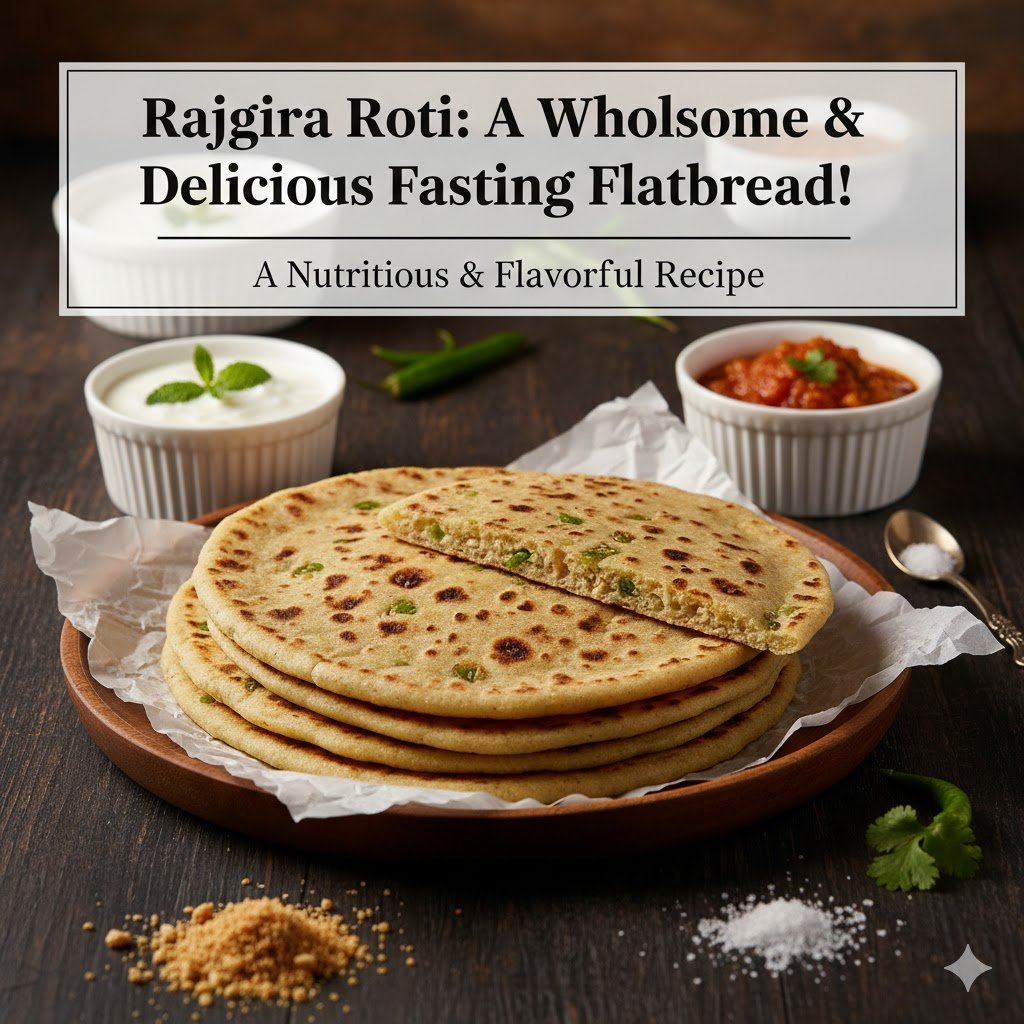
During fasting periods like Navratri or Ekadashi, it can sometimes be a challenge to find delicious and permissible meals. But fear not! Rajgira Roti (Amaranth Flour Flatbread) comes to the rescue as a nutritious, flavorful, and incredibly satisfying option. Made from amaranth flour, these rotis are not only allowed during fasts but are also packed with protein, fiber, and essential minerals, making them a superfood in their own right.
Unlike wheat rotis, Rajgira rotis are gluten-free and have a slightly denser, yet soft texture. They pair wonderfully with a simple fasting-friendly vegetable sabzi, yogurt, or even just a dollop of ghee. This recipe makes them even more delicious by incorporating mashed potatoes, ground peanuts, and green chilies for an extra burst of flavor!
Let’s get cooking and enjoy these wholesome fast-friendly flatbreads!
Serving Time: Best served hot. Serves: 2-3 people Prep time: 15 minutes Cook time: 15-20 minutes
Ingredients:
- 2 cups Rajgira atta (Amaranth flour)
- 1 medium Boiled potato
- 2 Green chilies (finely chopped, adjust to taste)
- ½ tsp Cumin seeds (roasted and ground)
- ¼ tsp Red chili powder (optional, for non-fasting or if allowed)
- ¼ cup Ground peanuts (roasted and coarsely ground)
- Rock salt (Sendha namak) to taste
- Cooking oil or Ghee for cooking the rotis
Method:
Step 1: Prepare the Dough
- Peanuts & Cumin: Dry roast the peanuts and cumin seeds in a pan until fragrant. Let them cool, then coarsely grind them together.
- Potatoes: Boil the potato until tender. Once cooled, peel its skin and mash it well in a large bowl, ensuring there are no lumps.
- Combine: To the mashed potato, add the rajgira atta, rock salt, ground peanuts, chopped green chilies, and red chili powder (if using).
- Knead: Mix all the ingredients well with your hands. Now, add little water, a tablespoon at a time, and knead to form a soft and pliable dough. Be careful not to add too much water, as the potato already adds moisture.
- Rest: Cover the dough with a moist cloth and let it rest for 10-15 minutes. This helps the flour absorb moisture and makes the dough easier to roll.
Step 2: Roll and Cook the Rotis
- Heat Pan: Heat a flat pan or tawa on medium flame.
- Roll Rotis: Divide the dough into equal small portions. Dust your working surface lightly with some rajgira atta. Take one portion of the dough and gently roll it out into a circle about 6 inches in diameter using a rolling pin. Since rajgira dough can be a bit sticky and prone to cracking, be gentle. You can also press it between two sheets of parchment paper for easier rolling.
- Cook Rotis: Place the rolled roti onto the hot tawa. Cook for about 30 seconds to 1 minute until small bubbles appear. Flip the roti. Add a little oil or ghee around the edges and on top. Cook until golden spots appear on both sides and the roti is cooked through.
- Repeat: Do the same for the remaining dough portions.
Step 3: Serve!
- Now, the spicy and delicious Rajgira Rotis are ready to serve!
- Serving Suggestion: These rotis taste best when served hot. Pair them with a simple tomato sabzi (made with fasting-friendly ingredients), a bowl of fresh curd (yogurt), or even some potato curry.
Enjoy this wholesome and satisfying meal during your fasts or anytime you crave a nutritious and flavorful flatbread!
People Also Ask (FAQ about Rajgira Roti)
Q1: What is Rajgira atta? A1: Rajgira atta is flour made from amaranth seeds. Amaranth is a pseudo-cereal, meaning it’s botanically not a cereal grain but is used in a similar way. It’s highly nutritious, gluten-free, and commonly consumed during Hindu fasting periods.
Q2: Is Rajgira Roti healthy? A2: Yes, Rajgira Roti is very healthy! Amaranth is rich in protein, fiber, iron, calcium, magnesium, and antioxidants. It’s a great source of energy, aids digestion, and is an excellent gluten-free alternative to wheat-based flatbreads.
Q3: Why is my Rajgira Roti breaking while rolling? A3: Rajgira dough is naturally less elastic than wheat dough. It can break if the dough is too dry, not rested enough, or rolled with too much pressure. * Tips: Ensure the dough is soft and pliable (add a tiny bit more water if dry). Let it rest for 10-15 minutes. Roll gently, and use plenty of dry flour for dusting, or try rolling between two sheets of plastic wrap/parchment paper.
Q4: Can I make Rajgira Roti without potato? A4: Yes, you can. However, the potato helps bind the dough and makes the rotis softer and easier to roll. If omitting potato, you might need to use warm water for kneading and handle the dough very gently. Some recipes use mashed sweet potato or a little boiled and mashed banana for binding.
Q5: How can I store leftover Rajgira Roti? A5: Rajgira Rotis are best eaten fresh. If you have leftovers, store them in an airtight container at room temperature for a few hours or in the refrigerator for up to a day. Reheat gently on a tawa or microwave, but they might lose some of their softness and become a bit drier.